Faith Arthur Faith Arthur

Why B.Y. Funding Funds Food for School Programming

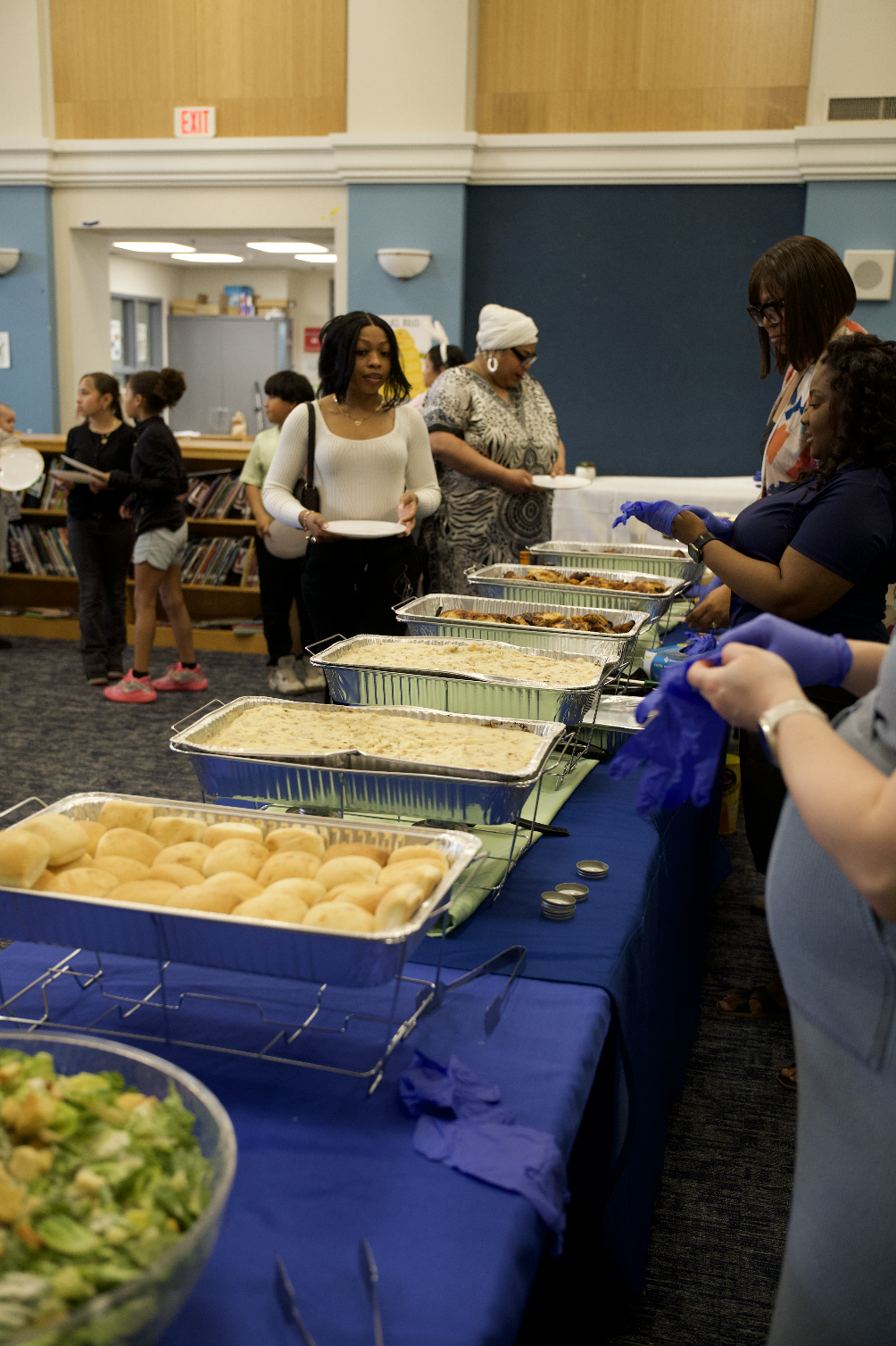
At B.Y. Funding, we fund food because it removes barriers to participation, strengthens school communities, and creates the conditions for meaningful connection. Food is not an extra. It is an essential support that helps families show up, students stay engaged, and schools build the relationships that make learning possible.

School programming often happens outside the traditional school day, during evenings, weekends, or extended hours, when families are balancing work, transportation, and caregiving responsibilities. When food is missing from these spaces, access becomes unequal. When food is present, participation becomes possible.

That is why B.Y. Funding invests in food as a core part of school-based programming.
Food is a cultural connector

Across cultures, food is how people gather, celebrate, and pass down stories. It is how communities build trust and how families feel at home in shared spaces. When schools provide food during programming, they are doing more than feeding people. They are creating a culturally responsive environment where families can connect as themselves, not as guests navigating an unfamiliar institution.

For many families, especially immigrant families and families of color, food is a primary expression of culture, care, and identity. Providing food at school events communicates respect and belonging, and helps families feel seen rather than accommodated.

Food transforms school programming into community space.

Food creates fellowship and belonging

Family engagement is strongest when families feel welcomed and supported. The CDC identifies school connectedness and family engagement as key drivers of student success (CDC, 2022). Food naturally creates fellowship. It slows people down, opens conversation, and encourages families to stay longer and engage more deeply.

When food is present:

  • families stay and talk instead of leaving quickly

  • staff and families connect beyond logistics

  • relationships form across grade levels and languages

  • events feel relational rather than transactional

These moments of fellowship are what turn one-time events into lasting partnerships between schools and families.

Food access directly impacts participation

Millions of families with children in the United States experience food insecurity each year (USDA Economic Research Service, 2023). For many families, attending school programming means extra costs they cannot absorb, especially during evenings when meals are already stretched thin.

Research links food insecurity to lower school engagement and higher absenteeism (Hager et al., 2023). While federal meal programs provide critical daily nutrition, they do not cover family events, cultural programming, or after-school activities. Funding food removes this barrier and allows families to participate without sacrificing basic needs.

Food supports student focus and persistence

Afterschool and extended-day programs often occur during dinner hours, when hunger interferes with attention, behavior, and persistence. Hunger is linked to reduced concentration and emotional regulation, which can limit the impact of enrichment and tutoring programs (USDA ERS, 2017).

Providing food helps protect instructional and enrichment time, allowing students to remain focused and engaged and allowing educators to spend time teaching rather than managing hunger-related disruptions.

Food is central to equitable school programming

Federal nutrition programs are essential, but they do not cover:

  • family engagement events

  • cultural celebrations and heritage nights

  • after-school enrichment and tutoring

  • evening workshops and meetings

  • student showcases and performances

These programs are often where trust is built and school culture is strengthened. Without food, participation drops. With food, schools become spaces of care, dignity, and belonging.

What B.Y. Funding supports

B.Y. Funding funds food for school programming that advances:

  • family engagement and relationship building

  • cultural connection and celebration

  • student enrichment and extended learning

  • community fellowship and school climate

  • attendance, persistence, and participation goals

We prioritize programs that are inclusive, stigma-free, and aligned to a school’s broader vision for student success.

Why this matters

Food is community infrastructure. It creates connection, fosters fellowship, and makes participation possible. When schools can provide food, they are not just feeding people. They are building trust, honoring culture, and strengthening the fabric of the school community.

That is why B.Y. Funding funds food.

Because learning thrives where people are nourished together.

References

Centers for Disease Control and Prevention. (2022). School connectedness and academic achievement. https://www.cdc.gov/healthyschools/professional_development/e-learning/P4HS/page05.html

Hager, E. R., Quigg, A. M., Black, M. M., Coleman, S. M., Heeren, T., Rose-Jacobs, R., & Frank, D. A. (2023). Household food insecurity and child school absenteeism. National Library of Medicine. https://pmc.ncbi.nlm.nih.gov/articles/PMC10200410/

USDA Economic Research Service. (2017). Food insecurity and children’s health and academic outcomes. https://www.ers.usda.gov/publications/pub-details/?pubid=84002

USDA Economic Research Service. (2023). Food security in the U.S.: Key statistics and graphics. https://www.ers.usda.gov/topics/food-nutrition-assistance/food-security-in-the-us/key-statistics-graphics/

Read More
Faith Arthur Faith Arthur

B.Y. Funding is awarded the Community Assistance Award by Alpha Kappa Alpha Educational Advancement Founation Inc.

B.Y. Funding is proud to share that its family engagement work is being supported through a Community Assistance Award awarded to B.Y. Faith its parent organization.

In an official award letter addressed to B.Y. Faith the Board of Directors of the Alpha Kappa Alpha Educational Advancement Foundation Inc. shared their pleasure in granting this Community Assistance Award. The award was made to B.Y. Faith to support B.Y. Funding programming focused on strengthening family engagement in Title I school communities.

This support reinforces the value of community rooted initiatives that bring families schools and partners together. Through B.Y. Funding the award will help sustain family engagement events school based activities and resource driven programming designed to address funding gaps and expand access for students and families.

B.Y. Funding is grateful to the Alpha Kappa Alpha Educational Advancement Foundation Inc. for their belief in this work and their continued commitment to educational advancement and community impact.

Read More
Faith Arthur Faith Arthur

Breakfast and Bonding

B.Y. Funding provided a $100 micro grant through our B.Y. Granting program to teacher Faith at Wheatley Education Campus to host Breakfast and Bonding, an early-year family engagement morning. Title I schools are chronically under-resourced when it comes to discretionary programming, meaning these same engagement opportunities are often eliminated or unsupported by traditional funding streams). Micro grants exist to bridge that gap quickly and flexibly when teachers name a need and propose a solution.

Altered image from the Breakfast and Bonding event

Date: October 2025
B.Y. Funding Program: B.Y. Granting
Amount Funded: $100
Impact Reach: 70 students and their families

B.Y. Funding, through the B.Y. Granting program, awarded a microgrant to teacher Faith at Wheatley Education Campus to launch Breakfast and Bonding, a family engagement event led by an educator who identified a need, developed a plan, and requested responsive funding to bring it to life. This micro-grant came from our B.Y. Granting program, which exists to fund high-impact school experiences that move quickly, reduce teacher out-of-pocket spending, and strengthen conditions that sustain Title I funding.

This event was approved for funding because early engagement drives measurable, long-term outcomes. When families connect with schools early in the year, it strengthens communication and increases student participation in daily academic routines (Henderson & Mapp, 2002). Researchers emphasize that engagement tied to student routines and learning yields greater impact than generalized involvement alone (US Department of Education, SEDL, 2013). For Title I schools, attendance consistency doesn’t just support students' academic achievement; it also stabilizes enrollment and protects access to federal dollars tied to participation (Harvard GSE, 2015).

During the event, 4th and 5th-grade students and families gathered for:

  • Breakfast staples supported by grant dollars or in-kind partners

  • Schoolwide announcements that linked family participation to student routines and engagement outcomes

  • A morning meeting that students complete daily to build connection, collaboration, and shared accountability

Meals were intentionally funded through grant dollars or donations to preserve limited school budgets:

  • Breakfast items: supported through flexible micro-grant funds

  • Bagels: donated by Bullfrog Bagels

  • Table setup and event kits: included tablecloths and curated hosting supplies

This micro grant invested in systems, not extras. It ensured Wheatley EC did not have to choose between community engagement and classroom resources. Other Title I schools should never be priced out of experiences that strengthen attendance, communication, and student follow-through.

We fund early, we fund flexibly, and we fund what educators say matters most. Teacher Faith led with a plan, and B.Y. Funding backed it. These are the investments that ripple far beyond one morning.

Read More